Your Examples of destructive forces images are available in this site. Examples of destructive forces are a topic that is being searched for and liked by netizens today. You can Find and Download the Examples of destructive forces files here. Download all royalty-free photos and vectors.
If you’re looking for examples of destructive forces images information connected with to the examples of destructive forces interest, you have visit the ideal site. Our website always gives you hints for seeing the maximum quality video and picture content, please kindly hunt and find more enlightening video content and graphics that fit your interests.
Examples Of Destructive Forces. Constructive Forces Some examples of destructive forces are volcanoes earthquakes erosion weathering and glaciers. What are some examples of destructive forces in nature. Constructive forces are building forces which builds up a landform while destructive forces are breaking forces. The elements of both are similar.
 Constructive And Destructive Forces Digital Science Activities Included Destructive Force Digital Science Classroom Science Experiments From pinterest.com
Examples include depositions earthquakes faults and volcanoes. Landslides volcanic eruptions earthquakes floods Constructive forces. Volcanoes release gas ash and lava that alter the appearance of the volcano and can change the land below build up of rock or destroyed land and trees. Answer 1 of 19. A slow destructive force that breaks rocks into smaller pieces called sediments. Click to see full answer.
Collection and analysis of data indicates that constructive forces include crustal deformation faulting volcanic eruption and deposition of sediment while destructive forces include weathering and erosion.
Cracks in the earths crust are called faults. I can explain how constructive and destructive forces affect the nature of landforms on Earth. What is an example of a destructive process. Destructive forces dont always have to. Two Types of Forces Destructive Forces. Collection and analysis of data indicates that constructive forces include crustal deformation faulting volcanic eruption and deposition of sediment while destructive forces include weathering and erosion.
 Source: in.pinterest.com
A slow destructive force that breaks rocks into smaller pieces called sediments. Destructive forces break down land and Earth. Constructive forces are processes that help build up the Eartheither by depositing soil or silt in a riveror by volcanoes and lava flows that generates new land. Some examples of destructive forces include erosion by water or wind volcanic activity earthquakes the impact of glaciers and even animals degradation of the environment. Is a sand dune constructive or destructive.
 Source: pinterest.com
Constructive forces are positive forces opposed to destructive forces in nature as they help build up earths surface features. Volcanoes and earthquakes usually occur along these faults. Constructive forces are processes that cause the Earths surface to build up or rise. Examples include depositions earthquakes faults and volcanoes. Deposition landslides volcanic eruptions floods.
 Source: pinterest.com
Landslides are constructive as well at destructive. Destructive forces break down land and Earth. Deposition landslides volcanic eruptions floods. Processes that destroy landforms. Constructive and destructive forces.
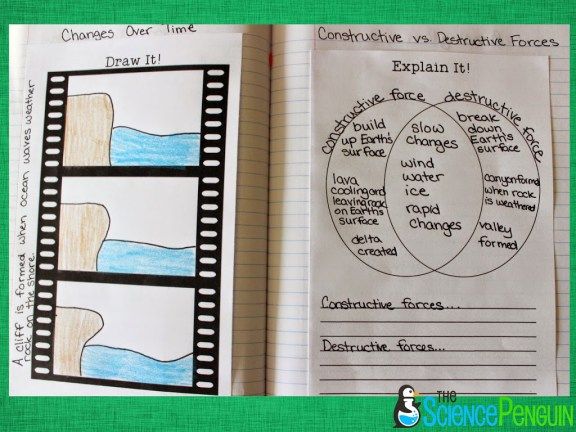 Source: pinterest.com
The three main examples of constructive forces are crustal deformation volcanic eruptions and deposition of sediment. Collection and analysis of data indicates that constructive forces include crustal deformation faulting volcanic eruption and deposition of sediment while destructive forces include weathering and erosion. When a piece of land falls or chips off the debris will later form new land. Silt and soil deposition as well as volcanic lava flows are examples of constructive forces. Constructive Forces Some examples of destructive forces are volcanoes earthquakes erosion weathering and glaciers.
 Source: pinterest.com
Destructive forces break down land and Earth. Image courtesy Wikipedia. Volcanoes release gas ash and lava that alter the appearance of the volcano and can change the land below build up of rock or destroyed land and trees. Volcanic activity and earthquakes alter the landscape in a dramatic and often violent manner. A constructive force affects the earths surface by building it up while forming new crust and landforms like mountains islands deltas and sand dunes.
 Source: pinterest.com
Constructive forces are building forces which builds up a landform while destructive forces are breaking forces. Constructive Forces Some examples of destructive forces are volcanoes earthquakes erosion weathering and glaciers. Landslides volcanic eruptions earthquakes floods Constructive forces. A volcanic eruption can lead to landslides ash falls mud-flows pyroclastic flows can. I can explain how constructive and destructive forces affect the nature of landforms on Earth.
Source: pinterest.com
What are 3 examples of constructive forces. What are 3 examples of constructive forces. Some of these forces change the Earth quickly while some change the Earth much more slowly. Two Types of Forces Destructive Forces. Are landslides constructive or destructive.
 Source: pinterest.com
Water gravity wind and glaciers. Cracks in the earths crust are called faults. Click to see full answer. For example a triangular deposit called a delta forms where a river or stream deposits sediments as it flows into a body of still water. Which are examples of destructive forces that shape Earths surface.
 Source: pinterest.com
Volcanic activity and earthquakes alter the landscape in a dramatic and often violent manner. The effects are competitive in nature. Cracks in the earths crust are called faults. Which are examples of destructive forces that shape Earths surface. Destructive forces dont always have to.
 Source: pinterest.com
Constructive forces are the processes that build land formations. Volcanoes release gas ash and lava that alter the appearance of the volcano and can change the land below build up of rock or destroyed land and trees. Answer 1 of 19. Some examples of destructive forces are volcanoes earthquakes erosion weathering and glaciers. Volcanic eruptions are constructive forces when they cause mountains to form.
 Source: pinterest.com
I can explain how constructive and destructive forces affect the nature of landforms on Earth. What is a destructive force. Some examples of destructive forces include erosion by water or wind volcanic activity earthquakes the impact of glaciers and even animals degradation of the environment. The ocean beats against a cliff and breaks it apart. What is an example of a destructive process.
 Source: pinterest.com
The elements of both are similar. Constructive and destructive forces. How can volcanoes and rivers be both constructive and destructive forces. Examples of Destructive Forces Volcanic Eruption. Which are examples of destructive forces that shape Earths surface.
 Source: pinterest.com
Cracks in the earths crust are called faults. Constructive Forces Some examples of destructive forces are volcanoes earthquakes erosion weathering and glaciers. Volcanoes and earthquakes usually occur along these faults. Examples of Destructive Forces Volcanic Eruption. How can volcanoes and rivers be both constructive and destructive forces.
 Source: pinterest.com
Which are examples of destructive forces that shape Earths surface. Human beings can also change the way the earths surface looks. Destructive forces dont always have to. Is a sand dune constructive or destructive. Landslides volcanic eruptions earthquakes floods Constructive forces.
 Source: pinterest.com
Constructive forces are positive forces opposed to destructive forces in nature as they help build up earths surface features. Is a sand dune constructive or destructive. These formations include mountains and sedimentary rock layers. Some examples of destructive forces are volcanoes earthquakes erosion weathering and glaciers. Click to see full answer.
 Source: pinterest.com
Destructive forces dont always have to. Destructive forces break down land and Earth. Water gravity wind and glaciers. Processes that destroy landforms. Deposition landslides volcanic eruptions floods.
 Source: pinterest.com
Examples of Destructive Forces Volcanic Eruption. Volcanic activity and earthquakes alter the landscape in a dramatic and often violent manner. Some examples of destructive forces include erosion by water or wind volcanic activity earthquakes the impact of glaciers and even animals degradation of the environment. What is an example of a destructive process. Water gravity wind and glaciers.
 Source: pinterest.com
Crustal deformation refers to changes in the shape of the land typically as a result of. Constructive forces are processes that cause the Earths surface to build up or rise. When it rains rocks are washed down a mountain or down a stream. Constructive and destructive forces. Processes that destroy landforms.
This site is an open community for users to do submittion their favorite wallpapers on the internet, all images or pictures in this website are for personal wallpaper use only, it is stricly prohibited to use this wallpaper for commercial purposes, if you are the author and find this image is shared without your permission, please kindly raise a DMCA report to Us.
If you find this site serviceableness, please support us by sharing this posts to your preference social media accounts like Facebook, Instagram and so on or you can also bookmark this blog page with the title examples of destructive forces by using Ctrl + D for devices a laptop with a Windows operating system or Command + D for laptops with an Apple operating system. If you use a smartphone, you can also use the drawer menu of the browser you are using. Whether it’s a Windows, Mac, iOS or Android operating system, you will still be able to bookmark this website.


